

Lifestyle Redesign is an innovative framework created at USC Chan to coach patients — mostly USC students — to develop daily routines that promote health and wellness. (Illustration/Sam Falconer)
Life, Redesigned
USC Chan’s Lifestyle Redesign program expands the role of occupational therapy, helping students improve their mental health and everyday lives through meaningful routines.
Several years ago, psychiatrist Jennifer Hong was brutally attacked by a patient. The attack deprived her brain of oxygen for almost a minute; the resulting physical and mental health effects were devastating, both professionally and personally.
Now in the last year of her child and adolescent psychiatry (CAP) fellowship at the Keck School of Medicine of USC, Hong credits the Lifestyle Redesign program at the USC Mrs. T.H. Chan Division of Occupational Science and Occupational Therapy with helping her get her life back on track.
“Because of this program, I have tons of optimism for the future,” Hong says. “Nothing has helped me with my anxiety and my depression and my life more than occupational therapy.”
Lifestyle Redesign is an innovative framework created at USC Chan to coach patients — mostly USC students — to develop daily routines that promote health and wellness.
The program takes a broader interpretation of occupational therapy beyond traditional associations with surgery recovery and workplace optimization.
“Lifestyle Redesign reflects the evolution of occupational therapy from a profession historically associated with rehabilitation to one that also plays a central role in prevention, health promotion and chronic disease management,” says Lindsey Shomer, associate professor of clinical occupational therapy and clinical manager of USC Chan’s OT faculty practice.
Kelly Liao, a USC Chan assistant professor of clinical occupational therapy, says that the way the program is designed expands opportunities for her and her colleagues to help patients like Hong manage their conditions.
“Through the program, we see patients improve their overall self-efficacy, get connected to resources and build up health-promoting habits and routines,” Liao says.
Because of this program, I have tons of optimism for the future.
Jennifer Hong, fellow at the Keck School of Medicine of USC
Creating new routines
The Lifestyle Redesign program was developed through a controlled trial in the 1990s led by former USC Chan faculty member Florence Clark and her research team. The trial evaluated the ability of an OT-based program to prevent disease and improve the health outcomes of older adults through lifestyle changes.
“What makes the Lifestyle Redesign program unique is that we don’t simply teach strategies,” Shomer says. “We partner with clients to develop sustainable habits and routines that are meaningful to them.”
The program’s main office is in the Health Research Association building on the USC Health Sciences Campus. A dedicated team also sees patients at a second clinic within the USC Engemann Student Health Center on the USC University Park Campus. Many clinicians work on a hybrid schedule, offering both in-person and telehealth services.
USC students can schedule a free 20-minute conversation with one of the program’s therapists to learn more about occupational therapy and Lifestyle Redesign.
Fighting through the fog
Hong says the resulting brain injury from her attack affected her attention, memory and executive functions the worst: She couldn’t remember the alphabet, was easily overwhelmed by tasks and couldn’t hear in crowded rooms. After seeing several therapists, she was diagnosed with attention-deficit/hyperactivity disorder (ADHD), depression, anxiety and PTSD.
When Hong moved to Los Angeles to begin the CAP fellowship at Keck School of Medicine, she struggled to take care of herself and manage the increased expectations of the program.
“I didn’t even notice I was not attending to my basic needs, such as showering or brushing my teeth on most days,” Hong says. Her inability to keep up her new daily demands culminated in forgetting to renew her medical license and being placed on temporary leave.
After CAP leadership referred her to the Lifestyle Redesign program, Hong says she instantly clicked with Liao, whom she described as “graceful, patient and supportive.”
“I immediately knew this was going to change every aspect of my life for the better, and I could not wait to continue,” Hong says.
First things first
To get Hong back on track, she and Liao first tackled Hong’s morning habits. After analyzing the environmental and sensory components of her routine, the pair discovered that Hong did not like being cold or wet in the morning. So, Liao helped Hong create practical workarounds, including placing a heater next to her bed and a cup at her bathroom sink to avoid scooping water into her mouth. This allowed her to optimize the first hours of her day.
“Before, I would be in bed for two hours literally every morning, dreading getting up,” Hong says. “Kelly completely transformed my morning routine, and we eventually worked on time management and awareness, prioritization, task initiation and completion, and incorporating environmental and externalizing scaffolding to help me cement my routines.”
One striking realization Hong had from working with Liao was how little she understood the ways ADHD affected many aspects of her everyday life and the lives of her patients — despite being a child psychiatrist.
“I wasn’t stupid, incompetent or careless for being the way I am,” Hong says. “I learned so much self-love and understanding for the way my brain functions. And that life does not need to always be this hard, all the time.”
Trojan through and through
Liao, who describes herself as a “Trojan through and through,” was part of the bachelor’s-to-master’s program at USC Chan before earning her doctorate there. She says the Lifestyle Redesign program played a significant role in her decision to pursue her doctoral degree at USC.
“Mental health has always been a huge passion of mine, and after researching the Lifestyle Redesign program I found that it’s a perfect blend of holistic healthcare that looks at people’s behaviors, compared to traditional psychotherapy,” Liao says.
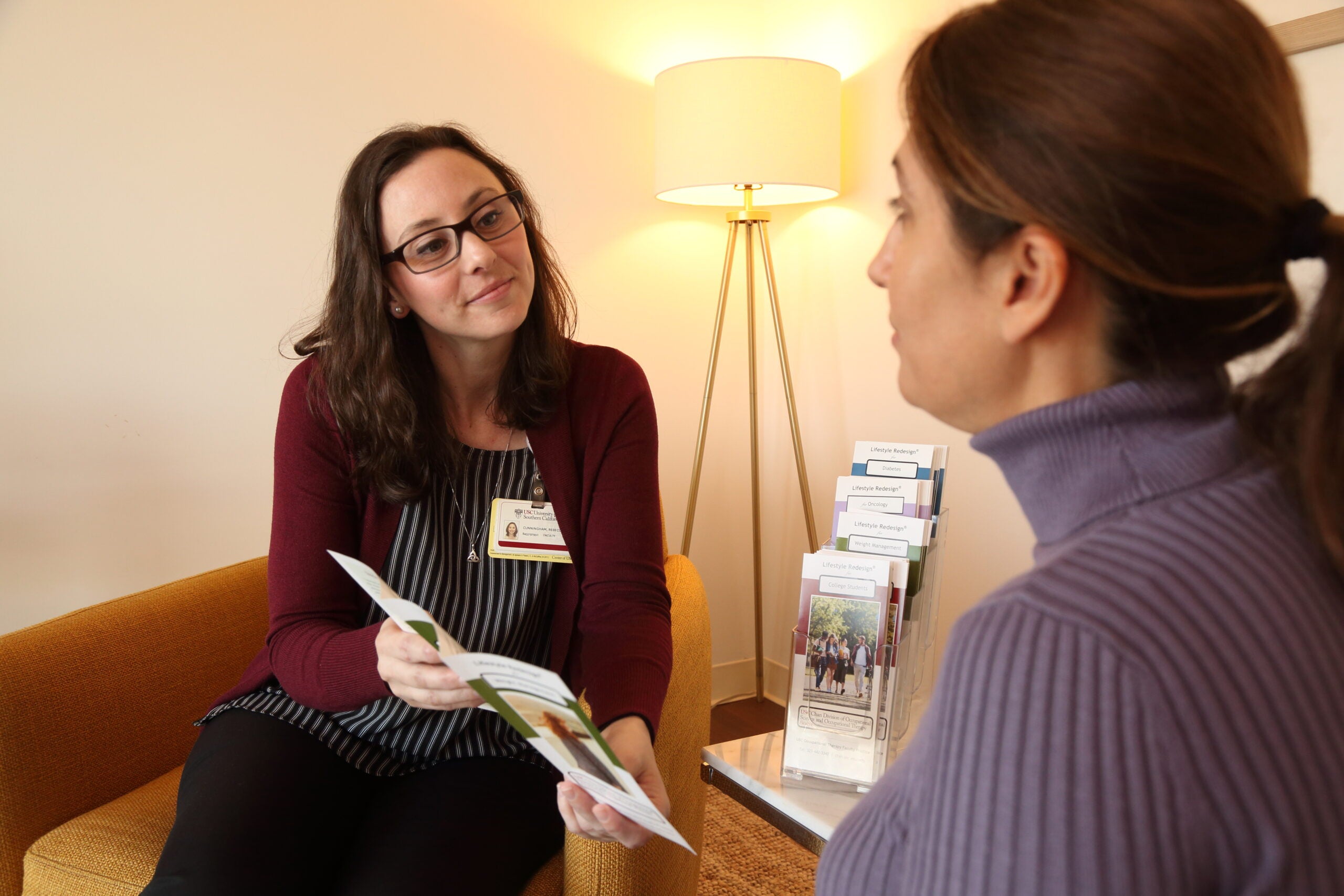
Because the program addresses chronic disease management, her colleagues in the program include clinicians who specialize in a variety of conditions, such as diabetes, hypertension and cancer.
Liao emphasizes that the aim of chronic disease management is not to “cure” the patient’s condition. “Clients become more confident once they know the strategies, tools and resources to use, so when challenges arise, they’re able to problem-solve and independently navigate those situations.”
The Lifestyle Redesign program is a perfect blend of holistic healthcare that looks at people’s behaviors, compared to traditional psychotherapy.
Kelly Liao, USC Chan assistant professor of clinical occupational therapy
Prioritizing health in college
It can be challenging to encourage college students to prioritize health and wellness at a time in life when many young people believe their body “can survive almost anything,” Liao says.
“We also know being in college means academics come first — sometimes self-care like sleeping and eating gets thrown to the side when midterms and finals are coming up.”
This was the case with Alex Zhi, a second-year graduate student at the USC Marshall School of Business. Zhi’s primary care physician referred him to the Lifestyle Redesign program for sleep issues.
After months of biweekly sessions with Liao, Zhi realized that because of occupational therapy, he could tackle issues in other areas of his life, including physical activity, nutrition and mental health.
“With Kelly’s help, I feel like I have so much support and so many resources,” Zhi says. “I feel like I literally transformed into another person: I went from someone who only eats Trader Joe’s frozen food and couldn’t get myself off the couch to someone who cooks constantly, gets enough protein and vegetables, and works out like five to six times a week.”
Zhi also found that the structure of occupational therapy sessions was more effective for him than the traditional therapy he’s experienced in the past.
“Taking very tangible steps, with someone who keeps me accountable and that I can brainstorm with, was more engaging and helped me achieve what I wanted faster,” Zhi says.
For Hong, who has now been in the program for nearly a year, the experience has been transformational.
“I learned that ADHD is actually my superpower,” Hong says. “With the proper scaffolding and skills learned through OT, I know this is just the beginning. There is absolutely nothing I cannot accomplish.”


