Longwei Liu is working to create cures that remotely trigger cell and gene therapies for conditions including cancer and a genetic disorder that can rob infants of their vision.
News Listing
As a USC study highlights the influence of AI tools on linguistic variety in writing, faculty share how they teach students to engage with artificial intelligence in ways that stimulate — instead of stifle — their creativity.
Two widely used tests for early markers of Alzheimer’s can be effective for an understudied population at high risk, according to USC-led research.
Holder spent nearly five decades at USC’s prestigious accounting school, including 13 years as its dean.
Researchers from USC and colleagues will investigate how stroke disrupts the brain networks that control the bladder and whether brain scans can predict who will benefit from a noninvasive spinal stimulation therapy.
With federal funding, the research team will collect detailed data on brain activity, sleep, smartphone use and more to build a picture of risks and protective factors among students with depression.
Using advanced 3D genome mapping technology to study prostate cancer cells, USC researchers have discovered a new feature of gene control networks that could help fight cancer.
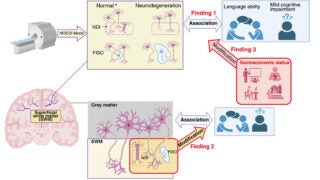
Research suggests that the health of short-range brain wiring may help protect thinking abilities when gray matter declines.
For Jose “Gabe” Rios, surgery and infusions at the USC Brain Tumor Center have been vital in managing neurofibromatosis type 2, a rare but debilitating genetic condition.
USC researchers developed a technique that uses focused ultrasound to temporarily “light up” solid tumors, giving cancer-fighting immune cells a target they can finally recognize.