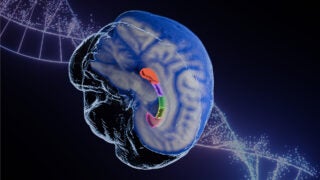
Created at USC from more than 54,000 brain scans, the model will help researchers detect changes in neural pathways linked to aging, Alzheimer’s disease and developmental conditions.
Neurosciences
News Listing
PODCAST: The president sits down with Assal Habibi, USC associate research professor of psychology and director of the USC Center for Music, Brain and Society, to discuss how music — something deeply woven into society and the human experience — helps shape the brain.
A popular teacher, McClure mentored many students across his long career.
The research team created a new AI-powered tool that identifies and quantifies the part of the brain that connects the hemispheres.
The technique reveals how tiny blood vessels in the brain pulse with each heartbeat — changes that may hold clues to aging and diseases such as Alzheimer’s.
USC-led research finds that an electric field device placed on the scalp, along with immunotherapy and chemotherapy, may help patients with glioblastoma live longer.
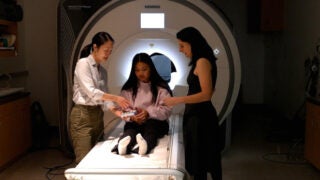
The lab at the USC Center for Affective Neuroscience, Development, Learning and Education will explore how neuroscience can be integrated into classroom practices.
USC’s neuroimaging unit has received funding to map reward circuitry in the brain and to investigate its role in two neurodevelopmental conditions.
A USC-led study of patients with epilepsy shows how making new neurons benefits cognition in adults.
A “brain stress test” could assess a person’s risk for stroke by measuring blood pressure in the brain with an affordable, portable device.